


Regenerative Medicine Program
Regenerative medicine aims to rebuild tissues that have been damaged by age, trauma or disease using biological materials and therapies. At University Hospitals, our orthopedic physicians and researchers are developing methods to maximize the body’s natural healing, anti-inflammatory and regenerative potential to repair damage and reduce pain caused by musculoskeletal diseases and injuries, reducing the need for surgery.

Make an Appointment
Call 216-844-7200 to make an appointment with an orthopedic specialist and learn more about what treatment options are right for you.
What is Regenerative Medicine?
Also known as orthobiologics, regenerative medicine uses biological materials found in the body, such as blood or bone marrow. These materials can be used to develop treatments for a wide range of musculoskeletal conditions and injuries.
Treatments are often developed using the patient’s own tissues and cells (called autologous regenerative medicine), which makes them uniquely safe and effective for the individual patient. Therapies derived from regenerative medicine include tissue engineering, stem cell therapies and artificial organs. These therapies can help improve function, reduce pain and decrease the need for more invasive procedures and surgeries.
Our Program
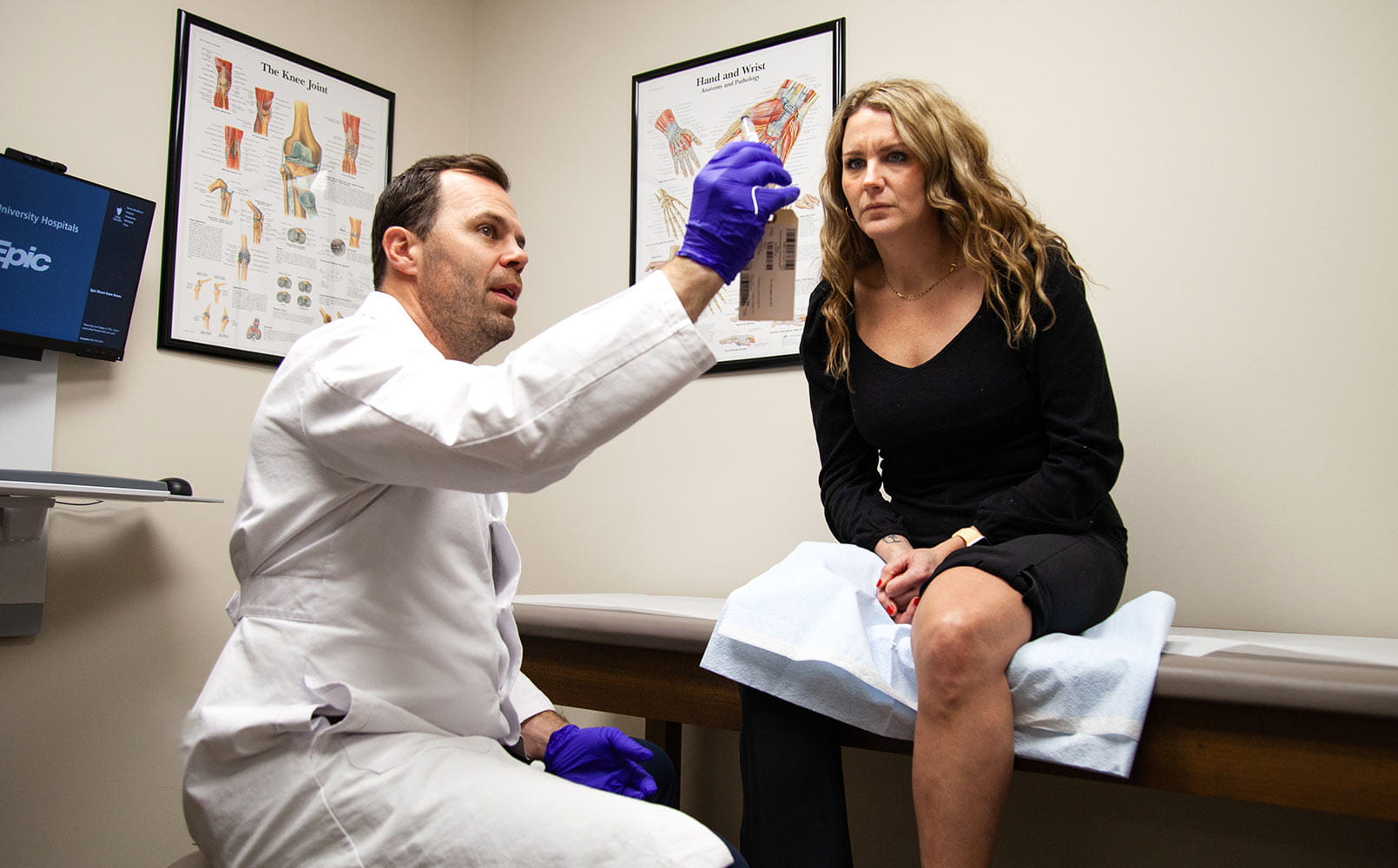
The University Hospitals Orthopedics Regenerative Medicine Program uses established and cutting-edge biologic materials to improve healing of orthopedic injuries. We’re leaders in advancing the use of mesenchymal stem cells – adult stem cells with the ability to differentiate into different types of cells – to treat musculoskeletal conditions.
Working in conjunction with the Case Western Reserve University’s National Center for Regenerative Medicine, we operate one of the only laboratories in the country with the ability to clinically harvest, expand and inject bone marrow stem cells to treat conditions such as osteoarthritis and knee cartilage defects as part of a clinical trial.
Our program collaborates with medical device companies to design, develop and implement new biologic materials, scaffolds and implants that are transforming the treatment of many orthopedic conditions. Additionally, our program was the recipient of a $47 million grant from the Advanced Research Projects Agency for Health (ARPA-H) to develop a biologic alternative to total knee replacement.
What Can Regenerative Medicine Treat?
In orthopedics, regenerative medicine can be used to treat pain and injuries associated with the musculoskeletal system, which includes bones, cartilage, joints, muscles, ligaments and tendons. It can treat degenerative conditions such as arthritis, as well as a range of sports-related and traumatic injuries. Some of the conditions and injuries regenerative medicine can be used to treat include:
- Cartilage injuries
- Degenerative disc disease
- Fractures
- Joint pain and injuries
- Labral tears
- Ligament injuries such as ACL tears
- Meniscus tears
- Muscle strains
- Osteoarthritis
- Tendonitis
What Are Some Regenerative Medicine Therapies?
Some of regenerative therapies that UH orthopedic experts utilize include:
- Hyaluronic acid (HA) injections
-
Hyaluronic acid is a naturally occurring substance found in the body’s cartilage and joints. It provides lubrication and cushioning and helps reduce friction in joints, allowing them to move smoothly. HA injections can be used to improve function and reduce pain in people with osteoarthritis or joint pain. With this therapy, a gel-like form of HA is injected directly into the effected joint. The use of HA injections can help delay or eliminate the need for surgery or other more invasive procedures.
- Platelet-rich plasma (PRP) injections
-
This biologic therapy uses a patient’s own blood cells to accelerate healing for musculoskeletal injuries. Platelet-rich plasma is created by putting the patient’s blood sample into a centrifuge device, which rapidly spins the sample to separate the blood components and concentrate the platelets within the plasma. The platelets and plasma are then injected back into the injured area, helping to decrease inflammation, reduce pain and speed up healing. PRP injections can be effective for soft tissue injuries such as those affecting ligaments, tendons, muscle and cartilage.
- Bone marrow aspirate concentrate (BMAC) injections
-
This biologic therapy uses a concentrated solution of stem cells and growth factor proteins extracted from a patient’s bone marrow, usually from the hip bone. The solution is then injected back into the patient to help repair and regenerate injured tissue. BMAC injections can be used to treat damage to muscles, bones, cartilage, tendons and ligaments.