


Harrison Kaufman, MD, Joins UH Diabetes & Metabolic Care Center
November 23, 2025
Innovations in Diabetes & Metabolic Care | Fall 2025
Harrison Kaufman, MD, recently returned to University Hospitals Cleveland Medical Center after completing a two-year fellowship in endocrinology at the UCLA David Geffen School of Medicine and UCLA Medical Center. Dr. Kaufman treats patients in all aspects of endocrinology and has a special interest in advanced diabetes treatment and technology.
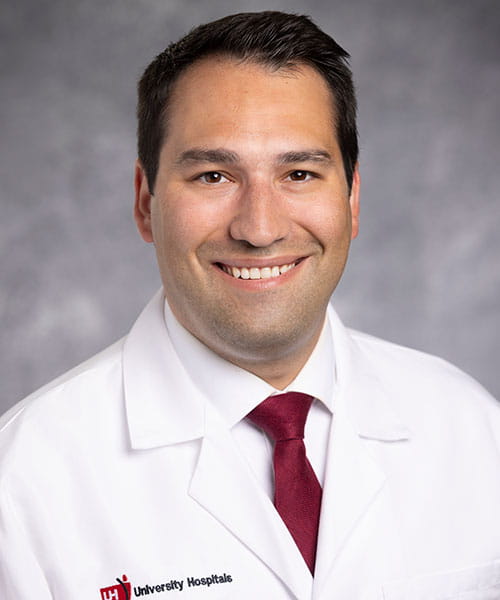 Harrison Kaufman, MD
“Today, we have a range of medications and advanced diabetes technologies that not only help regulate blood sugar levels but also improve quality of life for people living with this disease,” Dr. Kaufman says. “Several of the new medications for diabetes management have been shown to slow the progression of heart and kidney disease as well, which has revolutionized our way of managing these conditions.”
Growing up in the Cleveland area, Dr. Harrison attended The Ohio State University before earning his medical degree at Chicago Medical School and Rosalind Franklin University of Medicine and Science. After completing his residency in internal medicine at University Hospitals, he stayed on for an additional year to serve as Chief Resident. He is excited to return to his Northeast Ohio roots and join the University Hospitals Diabetes & Metabolic Care Center as an attending physician.
“We have an excellent team that includes physicians, advanced practice professionals, clinical pharmacists, diabetes educators, nutritionists and social workers who work together to ensure patients receive personalized care,” Dr. Kaufman says. “To manage diabetes effectively, we often need to follow patients as frequently as once or twice a month to track glucose levels and adjust medication dosages.”
To expedite access to appointments, the center has added urgent care slots for patients who need them.
Diabetes Prevalence and Screening
According to 2021 data from the American Diabetes Association, more than 38.4 million American adults have diabetes, with about 90 to 95 percent of those cases being type 2 diabetes (T2D). Of this group, 29.7 million are diagnosed and 8.7 million are undiagnosed. Even more alarming, an estimated 97.6 million Americans aged 18 and older have prediabetes.
With nearly one-third of the U.S. population living with diabetes remaining undiagnosed and millions of others at risk, the long-term burden on the health care system is staggering. “Diabetes has a detrimental impact on almost every organ system, and the best way to manage these complications is to prevent them from happening in the first place,” Dr. Kaufman says. “With strong glucose control and an emphasis on the benefits of lifestyle modification, we have shown that we can significantly prevent or reduce diabetes progression and dramatically improve health care costs.”
To broaden diabetes surveillance and management, ADA guidelines state that:
- Adults aged 35 and older should be screened for T2D, with tests repeated every three years if results are normal.
- Adults under 35 who are overweight or obese and have one or more additional risk factors should be screened.
- Individuals diagnosed with prediabetes should be screened for T2D every one to two years.
“Screening for diabetes is critical because mild to moderate levels of high blood sugar can go unfelt and undetected for years and can cause significant downstream effects on the heart, kidneys, nerves and eyes,” Dr. Kaufman says. “It often falls to primary care providers to make sure people with diabetes risks are identified, particularly those with a strong family history.”
The Future of T2D Management
Patient-centered T2D care has significantly progressed over the past decade, including glucagon-like peptide-1 agonists (GLP-1s), with many exciting developments on the horizon.
“GLP-1s have truly transformed the field of diabetes care, and they continue to be among the most emerging markets in pharmaceuticals,” Dr. Kaufman says. “There are approximately 30 new investigational drugs within the family of GLP-1 agonists being tested, and there is a lot of excitement around a triple receptor agonist that has shown incredible promise for both diabetes control and weight loss.”
Advancements in continuous glucose monitors are making blood sugar monitoring simpler, with each new version improving on the last.
“The two most popular continuous glucose monitors are the Dexcom G7 and the FreeStyle Libre 3 Plus, and I anticipate that the newer versions will be even more accurate in helping our patients monitor their glucose levels without relying on as many burdensome finger sticks,” Dr. Kaufman says.